
High-Performance Elastomers for Encapsulated and Extruded Seals
Compare FKM, FFKM, peroxide-cured silicone, platinum-cured silicone, and translucent silicone for critical sealing applications.
Since 1987, M-Cor Incorporated has engineered and manufactured advanced sealing solutions for demanding industries. These industries include semiconductor, pharmaceutical, aerospace, bioprocessing, food, beverage, and chemical processing.
Therefore, material selection should not be treated as a simple purchasing decision. Instead, it should be treated as a performance decision. In addition, it should be reviewed before downtime, contamination, or seal degradation occurs.
In this guide, five elastomer systems are compared by cure system, temperature range, chemical resistance, purity, regulatory suitability, and application use. As a result, engineers and buyers can make better sealing decisions with fewer assumptions.
Why Elastomer Selection Matters
At first, an encapsulated O-ring or extruded seal may look simple. However, the elastomer inside the seal controls recovery, flexibility, compression behavior, and long-term sealing force.
For this reason, the operating environment must be reviewed before a material is specified. Temperature exposure, chemistry, sterilization cycles, purity expectations, compression set, and regulatory requirements all affect seal performance.
In addition, a compound may pass receiving inspection and still fail later in service. Consequently, the lowest-cost compound may not be the lowest-cost sealing solution. Once downtime, maintenance labor, and replacement frequency are considered, material selection becomes a risk decision.
Material Comparison Table
The following comparison table helps engineers, buyers, and maintenance teams review common elastomer systems used in M-Cor sealing products. Also, on mobile devices, the table can be scrolled sideways for easier viewing.
| Material | Cure System | Hardness | Continuous Temp | Chemical Resistance | Steam / Hot Water | Purity / Regulatory | M-Cor Notes |
|---|---|---|---|---|---|---|---|
| FKM | Bisphenol-cured | 60–90 Shore A | −26°C to 204°C | Excellent against oils, fuels, and solvents. However, resistance to bases and amines is limited. | Fair to good | FDA / USP Class VI grades may be specified. | M-Cor extrudes FKM cord and tubing in-house for custom sealing applications. |
| FFKM | Peroxide / proprietary | 75–90 Shore A | Up to 300°C–327°C | Near-universal chemical resistance. Therefore, it is used in aggressive applications. | Excellent | Semiconductor and high-purity grades are available. | FFKM is selected where contamination or thermal degradation cannot be tolerated. |
| Peroxide-Cured Silicone | Organic peroxide | 40–80 Shore A | −60°C to 200°C | Good against water and polar media. However, it is poor against fuels and oils. | Good | FDA / USP options may be used. | It provides cost-effective flexibility and strong low-temperature elasticity. |
| Platinum-Cured Silicone | Platinum addition cure | 40–80 Shore A | −62°C to 232°C | Similar chemical profile. In addition, it has lower residue potential. | Excellent | USP Class VI / FDA grades may be required. | It is often chosen when cleanliness and lower extractables matter. |
| Translucent Silicone | Peroxide-cured | ~60–70 Shore A | −40°C to 200°C | Comparable to standard peroxide VMQ. Also, translucency helps inspection. | Good | FDA 21 CFR 177.2600 grades may be specified. | Visual inspection improves because translucency helps reveal contamination or moisture. |
Material Insights
FKM: Bisphenol-Cured Fluoroelastomer
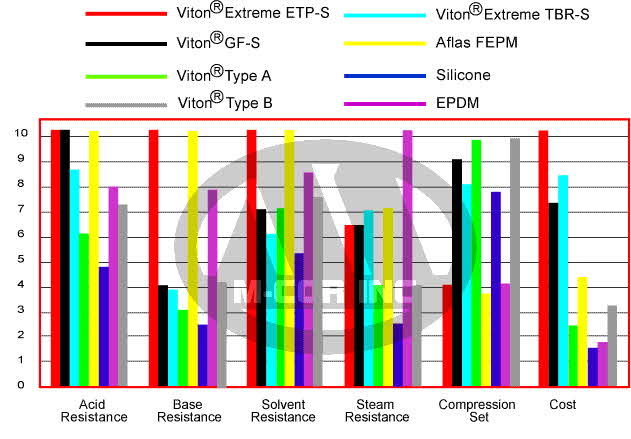
FKM is often selected for hydrocarbon environments. In addition, it offers strong compression-set resistance and long-term sealing stability. Therefore, M-Cor uses in-house extrusion to support custom FKM cord, profiles, and tubing.
FFKM: Maximum Chemical and Thermal Range
FFKM is frequently specified in semiconductor and plasma environments. It resists chemical attack, heat, and contamination risk. Consequently, it is chosen when near-zero compromise is expected.
Peroxide-Cured Silicone
Peroxide-cured silicone provides broad temperature flexibility. Also, it supports lower-cost sealing designs. However, compared with platinum-cured silicone, extractables may be higher. Therefore, it is common in general industrial and sanitary applications.
Platinum-Cured Silicone
Platinum-cured silicone is preferred where cleanliness, low extractables, and biocompatibility matter. In addition, peroxide residue is avoided during curing. As a result, this material fits many pharmaceutical, biotechnology, and medical applications.
Translucent Silicone
Translucent silicone supports visual process control. Therefore, operators may identify contamination, moisture, or flow issues more easily. Also, it may help inspection teams review parts before installation.
Encapsulated Seal Design
In encapsulated O-rings, the FEP or PFA jacket provides chemical resistance. Meanwhile, the elastomer core provides sealing force. Therefore, both materials should be reviewed together.
Applications Across Industries
Semiconductor / Plasma
FFKM is often specified because heat, purity, plasma resistance, and chemical compatibility must work together.
Pharmaceutical / Bioprocess
Platinum-cured silicone and FFKM are common where USP Class VI, sterilization resistance, and low extractables are required.
Aerospace / Energy
FKM and FFKM are often reviewed when heat, fuel exposure, lubricant resistance, and long service life matter.
Food and Beverage
Platinum-cured or peroxide-cured silicone may be selected where FDA compliance and sterilization cycles are important.
Industrial Service
FKM and silicone are often used where cost balance, availability, and environmental resistance must be considered.
Critical Process Equipment
In critical equipment, the lowest-priced seal may not be the lowest-cost seal. Therefore, documentation and traceability should be reviewed early.
M-Cor Commitment
M-Cor measures, traces, and certifies sealing components for every order. In addition, M-Cor supports each part with U.S.-based manufacturing, extrusion, encapsulation, and inspection experience.
Because critical industries rely on uptime and documentation, controlled inspection practices are used to support consistency. As a result, customers receive seals with source accountability, clear documentation, and practical engineering support.
Select the Right Elastomer Before the Seal Is Installed
Elastomer selection depends on temperature, chemistry, purity, mechanical stress, and regulatory expectations. However, no single material fits every condition.
Therefore, when performance, compliance, and documentation matter, M-Cor can help engineers and buyers choose the best balance of material performance, value, and sealing reliability.