
FFKM Seals: Molded, Vulcanized, or Encapsulated
Reduce mold costs, shorten lead times, and specify high-performance FFKM sealing products for demanding chemical and high-purity applications.
FFKM seals are used when standard elastomers cannot provide enough chemical resistance, thermal stability, or long-term sealing performance. Therefore, M-Cor offers multiple FFKM sealing routes, including molded FFKM O-rings, bonded or vulcanized FFKM seals, encapsulated FFKM seals, and custom FFKM tubing.
However, the best choice is not always a traditional molded part. In many cases, no-mold-cost vulcanized FFKM seals or encapsulated FFKM constructions can reduce lead time, support short-run prototypes, and provide better flexibility for nonstandard sizes.
In addition, M-Cor helps buyers and engineers review the real cost of FFKM seals. The question is not only what the seal costs today. Instead, the better question is what design route delivers the lowest total cost while protecting performance, purity, and uptime.
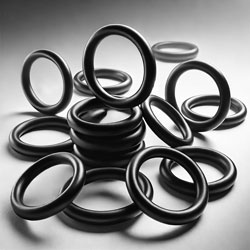
What Are FFKM Seals?
FFKM seals are perfluoroelastomer sealing products used in aggressive chemical, high-temperature, high-purity, and critical-process environments.
As a result, FFKM is often selected when chemical compatibility and thermal stability must work together. These applications may include chemical processing, semiconductor manufacturing, pharmaceutical processing, food processing, oil and gas, and other demanding systems.
In addition, FFKM can be used in several construction styles. For example, a seal may be molded, vulcanized, extruded as tubing, or used as a core inside an encapsulated seal. Therefore, engineers should not assume that a traditional molded O-ring is the only available route.
Choose the Right FFKM Seal Construction
At first, many buyers ask only for a molded FFKM O-ring. However, M-Cor can often review other FFKM seal options that may reduce mold cost, improve availability, or support short-run development.
Molded FFKM Seals
Molded FFKM seals are useful when the geometry, volume, and repeat demand justify tooling. Therefore, this route may fit standard or repeated production requirements.
Vulcanized FFKM Seals
Bonded or vulcanized FFKM seals can reduce mold costs and support nonstandard sizes. In addition, this route can help short-run prototypes move faster.
Encapsulated FFKM Seals
Encapsulated FFKM seals combine a fluoropolymer jacket with an FFKM core. As a result, the wetted surface can be protected while the core provides sealing force.
Why M-Cor Offers Encapsulated FFKM
Since FFKM already provides strong chemical resistance, many buyers ask why it should be encapsulated. However, encapsulation can still offer important advantages in selected applications.
First, encapsulated FFKM can avoid mold costs for custom or low-volume sizes. Next, it can support a wide range of cross sections and nonstandard dimensions. In addition, the fluoropolymer jacket can help protect the surface of the FFKM core from direct wetted-process exposure.
Therefore, encapsulated FFKM may be especially useful in semiconductor, pharmaceutical, bioprocessing, and other critical applications where purity, surface protection, and short-run availability matter.
Cost and Lead-Time Advantages
FFKM is a premium sealing material. Consequently, the wrong manufacturing route can make the project more expensive than necessary.
No Mold Cost Options
Vulcanized and encapsulated FFKM options can often reduce or avoid mold charges for low-volume and prototype work.
Short-Run Prototypes
In addition, M-Cor can review short-run FFKM prototype needs before the buyer commits to full tooling.
Nonstandard Sizes
Furthermore, vulcanized and encapsulated constructions may support nonstandard diameters and cross sections within manufacturing limits.
Preferred Cross Sections
M-Cor can review preferred cross sections for the application. Therefore, design flexibility may improve without forcing a molded solution.
Reduced Delay
Because tooling can add time, alternate FFKM construction routes may help reduce lead time in urgent programs.
Lower Total Cost
Finally, the right construction may reduce total cost when tooling, lead time, downtime, and minimum order quantity are considered.
FFKM Material Options and Alternatives
M-Cor can review FFKM materials and alternatives for customers seeking strong chemical resistance, thermal stability, and reliable compression performance.
For example, certain Tecnoflon® PFR perfluoroelastomer grades are known for broad chemical resistance and high-temperature performance. As a result, they may provide a cost-conscious option for applications where common premium FFKM trade names are difficult to justify.
However, FFKM material selection should be based on the actual chemical exposure, temperature, cleaning cycle, compression requirement, and documentation need. Therefore, M-Cor recommends application review before final material approval.
FFKM Applications
FFKM seals are often used where chemical resistance, heat resistance, and process reliability matter more than low upfront part cost.
Chemical Processing
FFKM seals can support aggressive chemical service where acids, caustics, solvents, steam, or mixed process streams may be present.
Semiconductor Manufacturing
In addition, FFKM seals may be reviewed where purity, chemical resistance, and process control are important.
Pharmaceutical and Bioprocess
FFKM options may support clean-in-place, steam-in-place, and high-purity processing requirements when proper grades are specified.
Food Processing
Some FFKM grades may support food contact applications where chemical resistance and cleaning cycles are part of the process.
Oil and Gas
Meanwhile, FFKM may be reviewed where hydrocarbons, sour gas, high temperature, or aggressive fluids are present.
Critical Equipment
Finally, FFKM seals may help reduce risk where leakage, downtime, repeat maintenance, or chemical attack carries a high cost.
FFKM Performance Comparison
The following comparison gives engineers and buyers a practical starting point. However, these values should be reviewed against the actual application, published supplier data, and M-Cor’s engineering review.
| Property | Kalrez® 4079 | Kalrez® 6375 | Tecnoflon® PFR 94 | Tecnoflon® PFR 95HT |
|---|---|---|---|---|
| Hardness Shore A | 75 | 75 | 71 | 72 |
| Tensile Strength MPa | 16.88 | 15.16 | 20.0 | 18 |
| Elongation at Break | 150% | 160% | 155% | 200% |
| Compression Set | 25% at 70h / 204°C | 30% at 70h / 204°C | 18% at 70h / 204°C | 19% at 70h / 204°C |
| Maximum Service Temperature | 316°C | 275°C | 235°C | Over 300°C |
| Typical Use | General-purpose chemical applications | Broad chemical process applications | High chemical resistance applications | High heat and chemical resistance, including water and steam conditions |
| Manufacturer | DuPont | DuPont | Solvay | Solvay |
Note: This table is provided for general comparison. Final selection should be reviewed against published material data, temperature, media, pressure, compression, and application requirements.
FFKM Sample Designs and Custom Geometry
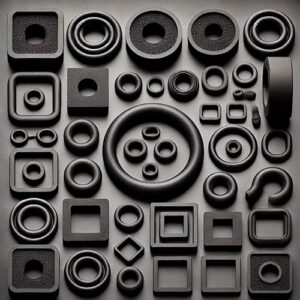
Because every sealing problem is not solved by a standard molded O-ring, M-Cor can review custom FFKM geometry, tubing, round profiles, square profiles, and specialty shapes.
In addition, M-Cor can evaluate whether a molded, vulcanized, extruded, or encapsulated FFKM route is the best fit. Therefore, buyers can avoid paying for unnecessary tooling when a more practical route is available.
Coming Soon: Engineer-Reviewed FFKM White Paper
M-Cor is preparing an engineer-reviewed white paper on FFKM molded, vulcanized, extruded, and encapsulated sealing options.
This white paper will help engineers and buyers compare cost, lead time, tooling, material selection, surface protection, short-run prototypes, and nonstandard sizes. As a result, the reader can better decide whether molded FFKM, vulcanized FFKM, or encapsulated FFKM is the right manufacturing route.
Therefore, if your application involves high-cost FFKM seals, urgent delivery, no-mold-cost prototypes, or critical-process sealing, request notification through M-Cor.
Frequently Asked Questions About FFKM Seals
Why would I choose vulcanized FFKM instead of molded FFKM?
Vulcanized FFKM may reduce or avoid mold costs. In addition, it can support low-volume, urgent, or nonstandard size requirements.
Why encapsulate FFKM if FFKM is already chemical resistant?
Encapsulation may protect the surface of the FFKM core in wetted processes. Also, it can support custom sizes without mold costs.
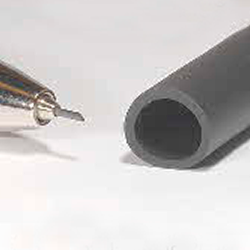
Can M-Cor supply FFKM tubing?
Yes. M-Cor can review custom FFKM tubing, profiles, and special shapes depending on the design and application requirements.
Is the lowest-priced FFKM seal the best choice?
Not always. Price matters. However, tooling, lead time, compatibility, documentation, downtime risk, and repeat failure cost should also be reviewed.
Reduce FFKM Mold Cost, Lead Time, and Application Risk
FFKM seals are expensive because the material and application demands are high. However, the right construction can reduce unnecessary tooling, support short runs, and improve lead time.
Therefore, before buying another high-cost molded FFKM seal, ask M-Cor to review whether molded, vulcanized, extruded, or encapsulated FFKM is the better route.