
Teflon® Encapsulated Cam Lock Gaskets
Food, pharma, chemical processing, and fluid transfer systems need gaskets that resist chemical attack and support reliable sealing.
M-Cor Inc. manufactures silicone and Viton®/FKM encapsulated cam and groove coupler gaskets for corrosive chemical transport hose applications. Therefore, these gaskets are often selected when standard Viton®, Buna, or EPDM gaskets do not provide enough chemical resistance, cleanliness, or sealing reliability.
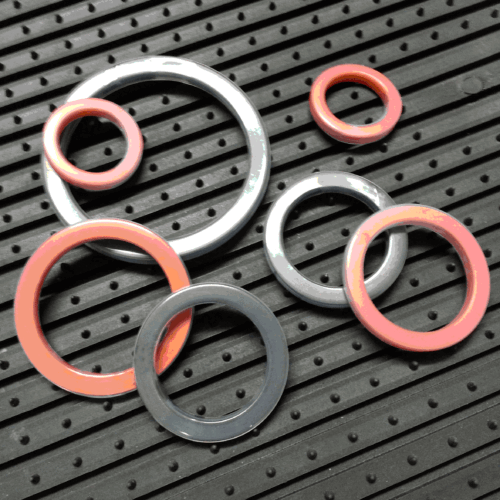
In addition, each encapsulated cam lock gasket uses an elastomer core with a PTFE-based encapsulation. As a result, the core is protected from direct chemical exposure. Meanwhile, sealing force and recovery are maintained by the elastomer core.
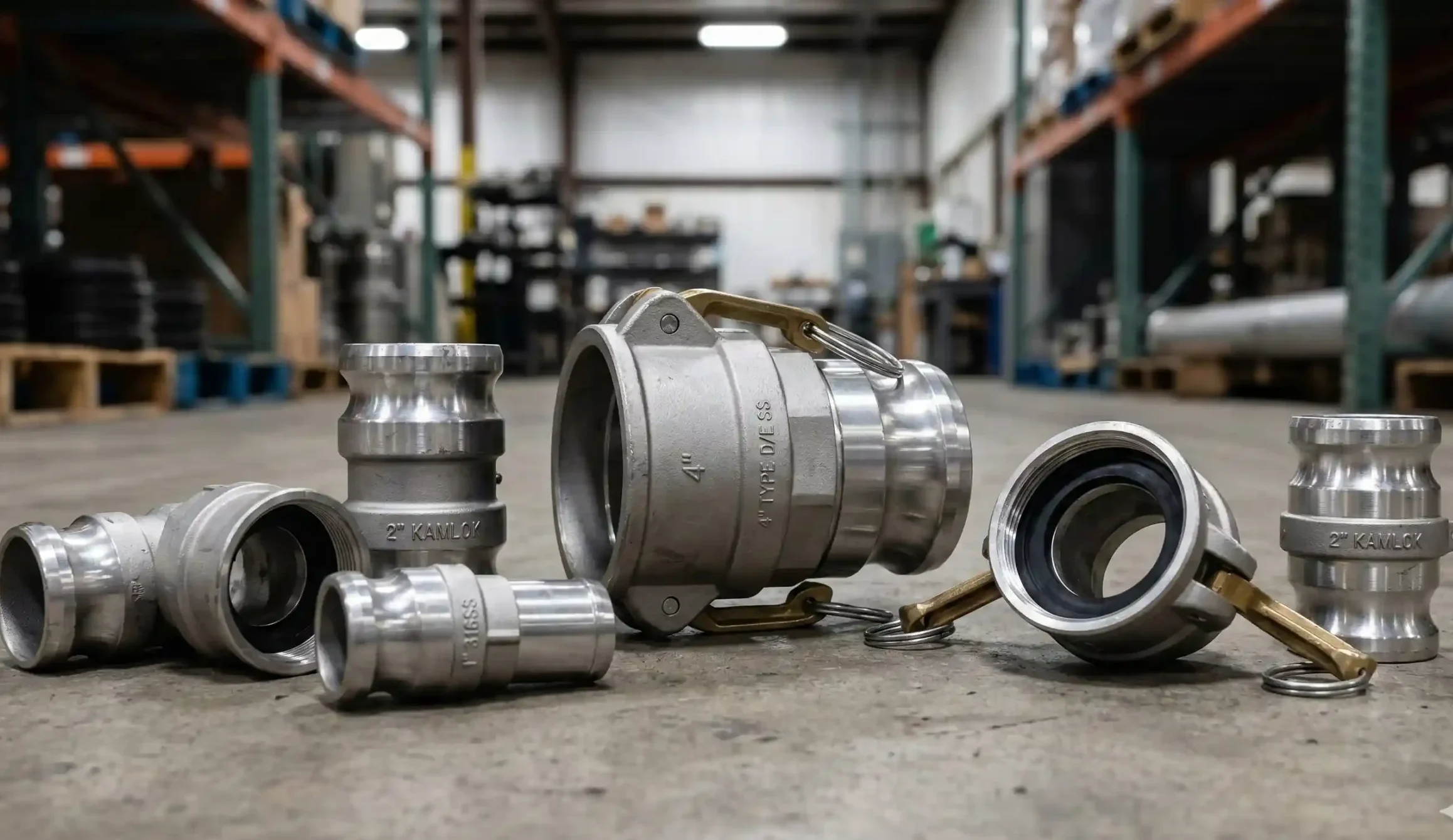
Encapsulated Cam Lock Gaskets for Chemical Transfer
At first, a cam lock gasket may look like a simple replacement part. However, in aggressive fluid transfer systems, the wrong gasket can create leakage, contamination, downtime, or safety risk.
For this reason, M-Cor encapsulated cam lock gaskets combine chemical resistance with elastomer recovery. The PTFE-based outer jacket helps resist corrosive fluids and cleaning chemicals. In addition, the silicone or FKM core provides compression and sealing force.
Consequently, the gasket supports a clean, non-stick sealing surface while maintaining the resilience needed for pressure and repeated coupling use.
Key Features of Encapsulated Cam Lock Gaskets
The following features make encapsulated cam lock gaskets useful in demanding industrial, sanitary, and chemical transfer applications.
High Chemical Resistance
PTFE-based encapsulation helps protect the elastomer core from aggressive chemicals, solvents, and cleaning fluids.
Wide Temperature Range
Depending on the core material, these gaskets can support temperatures from approximately -60°C to +205°C.
Low-Friction Surface
The encapsulated surface offers a low coefficient of friction. Therefore, it helps create a clean, non-stick sealing face.
Sterilizable Design
In sanitary applications, the gasket design can support cleaning and sterilization requirements when compatible materials are specified.
FDA and USP Options
Where applicable, FDA and USP Class VI compliant materials may be specified for food, pharma, and bioprocess use.
Improved Sealing Recovery
Because the elastomer core supplies recovery, sealing force can improve compared with many standard gasket materials.
Why Use Encapsulated Cam Lock Gaskets?
In harsh chemical service, standard gaskets can degrade, swell, crack, or lose sealing force. As a result, leakage and repeat maintenance may occur.
However, M-Cor encapsulated cam lock gaskets help reduce premature seal failure by protecting the elastomer core from direct chemical attack. In addition, the encapsulated surface helps support cleanliness in food, pharmaceutical, and bioprocessing systems.
Common Applications
M-Cor encapsulated cam lock gaskets are commonly used where fluid transfer systems require chemical resistance, cleanability, and practical sealing performance.
Chemical Transfer Hose Couplers
These gaskets help seal cam and groove couplers used to transfer aggressive chemicals, solvents, and hazardous materials.
Food and Beverage Processing
The non-reactive encapsulated surface may help reduce contamination risk when compatible materials are specified.
Pharma and Bioprocessing
In pharmaceutical systems, cleanability, documentation, and material compatibility are often required.
Chemical Processing Plants
Corrosive fluids, solvents, and cleaning agents can damage standard materials. Therefore, encapsulation may improve service life.
Tanks, Pipelines, and Reactors
In transfer and process equipment, sealing reliability supports uptime, worker safety, and process control.
Oil, Gas, and Petrochemical
FKM-core options may be reviewed where fuel, oil, and chemical compatibility are important.
M-Cor Advantage
M-Cor combines chemical resistance, sealing force, and durability in one encapsulated gasket design. In addition, the PTFE-based encapsulation acts as a barrier, while the elastomer core supports compression and recovery.
Therefore, for applications where safety, cleanliness, and chemical resistance matter, M-Cor encapsulated cam lock gaskets provide a practical sealing solution for demanding industrial environments.
Data Sheets
Before a gasket is specified, engineers and buyers should review the available data for chemical transfer or sanitary processing.
Encapsulated Cam Lock Coupler Gasket Standard Sizing
The following standard sizing chart lists common M-Cor encapsulated cam lock gasket dimensions. On mobile devices, each size displays as a separate card for easier viewing.
Need an Encapsulated Cam Lock Gasket for a Demanding Application?
Choosing the correct cam lock gasket depends on chemical exposure, temperature, cleaning process, material compatibility, and coupling size.
Therefore, M-Cor can help review your application before the wrong gasket creates leakage, downtime, or contamination risk.