
Encapsulated O-Rings Manufactured in the USA
FEP and PFA encapsulated O-rings for chemical, pharmaceutical, semiconductor, food, and industrial sealing applications.
M-Cor manufactures FEP and PFA encapsulated O-rings for critical static sealing applications. These seals combine a fluoropolymer jacket with a resilient elastomer core. As a result, they help protect equipment in aggressive chemical, high-purity, and high-temperature environments.
Since 1987, M-Cor has supported engineers, maintenance teams, buyers, and distributors who need more than a commodity seal. Therefore, this page explains how encapsulated O-rings work, where they fit, and what to verify before failure becomes the costliest specification.
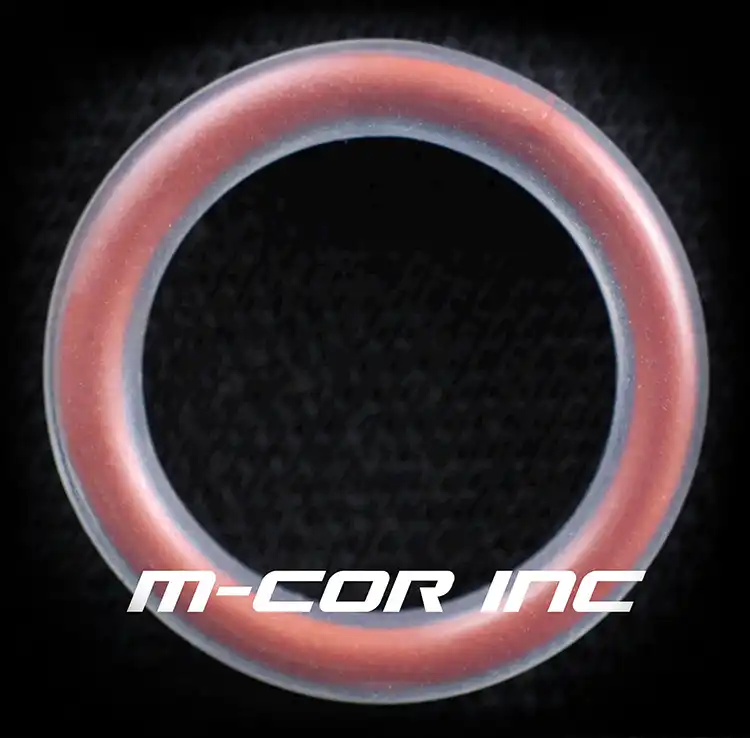
USA Manufacturing
Made by M-Cor in the United States.
FEP & PFA Jackets
Fluoropolymer protection for demanding media.
Core Options
Silicone, FKM, EPDM, hollow core, and specialty cores.
Documentation
Certification and inspection support where required.
One Failed O-Ring Can Stop an Entire Production Line
When an O-ring leaks or degrades, the goal is simple: get the equipment running again. However, the cost does not stop with the replacement part.
Seal Installed
The equipment returns to service. At first, the problem appears solved.
Production Restarts
Uptime returns. Consequently, the buyer, plant, or distributor expects the repair to hold.
Seal Fails Again
Shortly afterward, the same problem may return. In many cases, the part was not properly specified.
Downtime Returns
As a result, the real cost becomes lost time, lost production, and lost trust.
Why does this happen?
The answer is usually poor quality, poor specification, or both. Therefore, the lowest part price can become the highest total cost when the seal fails in service.
What Are Encapsulated O-Rings?
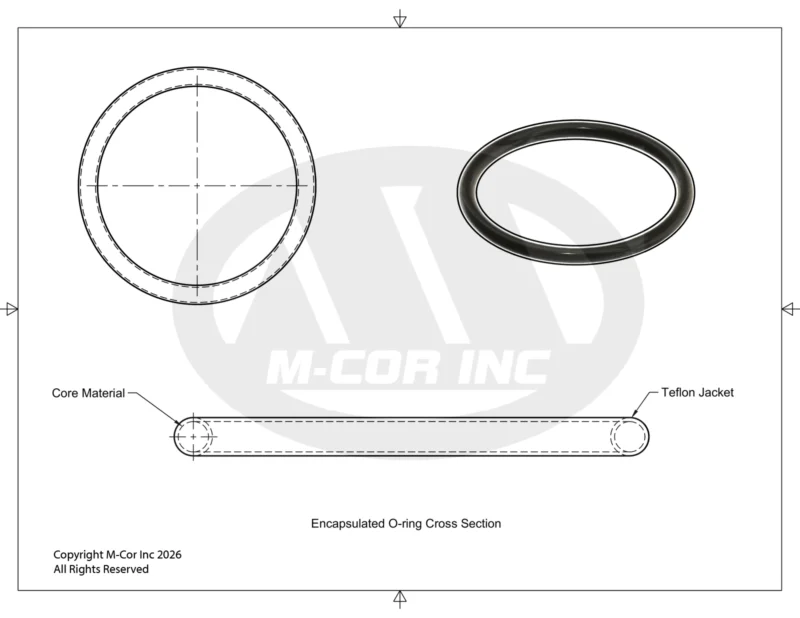
An encapsulated O-ring is a composite seal. It uses a seamless FEP or PFA fluoropolymer jacket around an elastomer core. Therefore, the jacket protects the core from direct media exposure while the core provides compression and recovery.
This design is useful when a standard elastomer cannot survive the chemical environment, yet a solid PTFE seal may not provide enough elastic recovery. In other words, the jacket provides chemical resistance, while the core supplies sealing force.
- FEP or PFA jacket for chemical resistance and clean contact surfaces.
- Silicone, FKM, EPDM, hollow, or specialty elastomer core for recovery.
- Best suited for static sealing where sliding or abrasion is limited.
- Used in chemical, pharmaceutical, semiconductor, food, and filtration systems.
FEP vs. PFA Encapsulated O-Rings
Both FEP and PFA jackets provide strong chemical resistance. However, the best choice depends on temperature, application severity, specification requirements, and cost sensitivity.
FEP Encapsulated O-Rings
FEP encapsulated O-rings are commonly selected for broad chemical resistance and general high-performance static sealing. Additionally, they are often used when the service temperature is within the FEP operating range.
Common combinations: FEP over silicone, FEP over FKM, and FEP over specialty cores.
PFA Encapsulated O-Rings
PFA encapsulated O-rings are often selected for higher-temperature applications and more demanding service conditions. As a result, PFA may be the better choice when heat, chemical exposure, or process sensitivity increases.
Common combinations: PFA over silicone, PFA over FKM, and PFA over FFKM for specialty applications.
Application review is recommended when temperature, pressure, groove geometry, stretch, chemical exposure, or inspection requirements are critical.
Specify Quality Before Failure Specifies the Cost
Encapsulated O-rings are often treated like simple catalog parts. However, the manufacturing method, jacket material, core selection, weld quality, dimensions, and inspection process all affect performance.
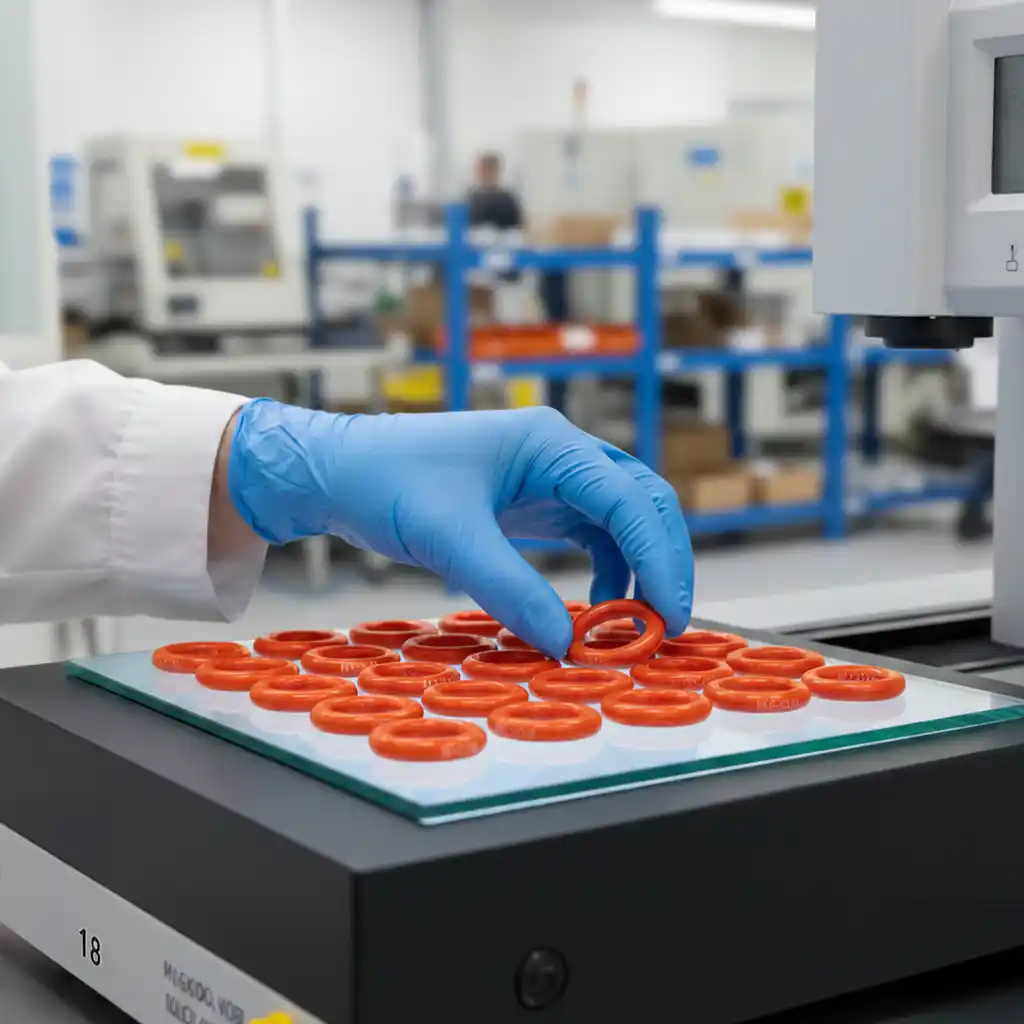
At M-Cor, our process is built around reliable manufacturing and clear documentation. First, we use certified materials where applicable. Next, we measure and inspect the finished seals. Then, we support the part with documentation when the application requires it.
What to Ask Before You Buy an Encapsulated O-Ring
Price matters. However, a low-price seal should still meet the application requirement. Therefore, buyers and distributors should verify the items below before the order becomes a field problem.
Material Certification
Ask whether FEP, PFA, silicone, FKM, EPDM, or FFKM documentation is available for the application.
Published Tolerances
Confirm the applicable tolerance method before comparing the part to molded O-ring standards.
Inspection Method
Ask how the O-ring is measured, inspected, and documented after production.
Application Review
Share chemical exposure, temperature, pressure, groove design, and installation conditions.
Traceability
Confirm what documentation will support the order if a quality review is required later.
Manufacturing Experience
Choose a supplier that understands encapsulated seal behavior, not only part numbers.
Encapsulated O-Rings and Related Sealing Products
M-Cor manufactures standard, custom, and specialty encapsulated sealing products. In addition, engineering review is available for nonstandard sizes, close-tolerance requests, and demanding applications.
FEP Encapsulated Silicone O-Rings
Useful for many static sealing applications that require chemical resistance and flexible recovery.
FEP Encapsulated FKM O-Rings
Selected when the application benefits from an FKM core beneath the fluoropolymer jacket.
PFA Encapsulated Silicone O-Rings
Often used where higher temperature performance or a PFA jacket is preferred.
ENCAP-O-SEAL® Cam & Groove Gaskets
Encapsulated gaskets for cam and groove coupling applications in chemical and sanitary systems.
FEP & PFA Encapsulated Springs
Specialty spring-supported sealing assemblies for applications that require engineering review.
PFA Encapsulated FFKM
Available for extreme applications where mold cost, size range, chemical exposure, or short-run development matters.
Where Encapsulated O-Rings Are Used
Encapsulated O-rings are used where conventional elastomers may degrade, contaminate the process, or fail too quickly. As a result, they are common in applications that require chemical resistance, purity, and dependable static sealing.
- Semiconductor processing equipment
- Pharmaceutical and bioprocessing systems
- Chemical handling and transfer systems
- Food and beverage processing equipment
- Filtration and high-reliability sealing environments
- Custom industrial static sealing applications

Encapsulated O-Ring Tolerances Are Often Misunderstood
Encapsulated O-rings are not molded rubber O-rings. Instead, they are precision cut-to-length assemblies. Therefore, tolerance expectations must reflect the material, the process, thermal expansion, and the method of measurement.
Do not assume molded AS568 ID tolerances apply
Many specification problems begin when a buyer applies molded O-ring dimensional expectations to an encapsulated O-ring. Consequently, the part may be judged against the wrong standard.
M-Cor provides tolerance guidance, measurement support, and optional inspection documentation when the application requires closer control.
M-Cor can support:
- Documented tolerance ranges.
- Transparent measurement methodology.
- Optional statistical inspection.
- Certification when required by the order.
- Engineering discussion before production.
How M-Cor Builds Confidence Into the Seal
A reliable encapsulated O-ring starts before production. Therefore, M-Cor reviews the material, size, documentation, and application requirements before the order becomes a production issue.
Review
First, we review size, material, quantity, and application notes when provided.
Manufacture
Next, we manufacture the encapsulated O-ring using the specified jacket and core combination.
Inspect
Then, we inspect dimensions and visible quality according to the applicable requirement.
Document
Finally, we provide certification and supporting documentation when ordered or required.
Internal Tools for Encapsulated O-Ring Applications
Use these M-Cor resources to support groove design, tolerance discussion, weight estimates, hardness review, and dimensional planning. Additionally, these links help engineers move from product selection to practical specification.
M-Cor Groove Assistant
Use this tool for O-ring gland design support.
Tolerance Simulation
Review Monte Carlo tolerance simulation for dimensional yield.
Extruded Weight Calculator
Estimate extruded rubber weight for material planning.
Shore A Calculator
Review encapsulated O-ring Shore A hardness behavior.
Mean Diameter Calculator
Calculate ID, OD, and mean diameter values.
Installation Guide
Review encapsulated O-ring installation concerns and handling guidance.
Why Encapsulated O-Rings Fail and How to Avoid It
Most avoidable failures begin with an incomplete specification. For that reason, the application should be reviewed before price becomes the only decision.
Incorrect Tolerance Expectations
Confirm the correct tolerance method before inspection. Otherwise, a usable part may be rejected against the wrong standard.
Improper Groove Design
Review squeeze, gland fill, stretch, surface finish, and installation method before production.
Wrong Jacket Selection
Use FEP or PFA based on temperature, chemistry, process conditions, and application severity.
Excessive Stretch
Encapsulated O-rings are not designed for aggressive stretching. Therefore, installation conditions matter.
Dynamic Abrasion
These seals perform best in static applications. Sliding, scraping, or abrasion can damage the jacket.
Missing Documentation
Specify certification and inspection requirements at the time of order, not after a problem occurs.
Encapsulated O-Ring FAQ
What is the difference between FEP and PFA encapsulated O-rings?
FEP and PFA are fluoropolymer jacket materials. Both provide strong chemical resistance. However, PFA is often selected for higher-temperature or more demanding applications.
Are encapsulated O-rings used in high-purity applications?
Yes. Encapsulated O-rings are commonly used in semiconductor, pharmaceutical, food, and bioprocessing systems because the fluoropolymer jacket provides a clean contact surface.
Do encapsulated O-rings follow AS568 molded O-ring tolerances?
Not always. Encapsulated O-rings are cut-to-length assemblies rather than molded rubber parts. Therefore, tolerance expectations should be reviewed before the order is placed.
Can M-Cor manufacture custom sizes?
Yes. M-Cor manufactures standard, nonstandard, and custom encapsulated O-ring sizes. In addition, engineering review is available for close-tolerance and specialty applications.
When should I contact M-Cor before ordering?
Contact M-Cor when the application involves aggressive chemicals, tight tolerances, high-purity requirements, unusual groove geometry, high temperature, or prior seal failure.
Where can I find more answers?
For more answers, visit the M-Cor encapsulated O-ring FAQ.
Need an FEP or PFA Encapsulated O-Ring?
Send your size, material preference, quantity, temperature, chemical exposure, groove details, and documentation requirements. Then M-Cor can help you select the correct encapsulated sealing solution.
Call: 406-227-0477 | Email: customerservice@m-cor.com